



Joani Blank (1937-2016) | The Birth Mother of Modern Sex Shops
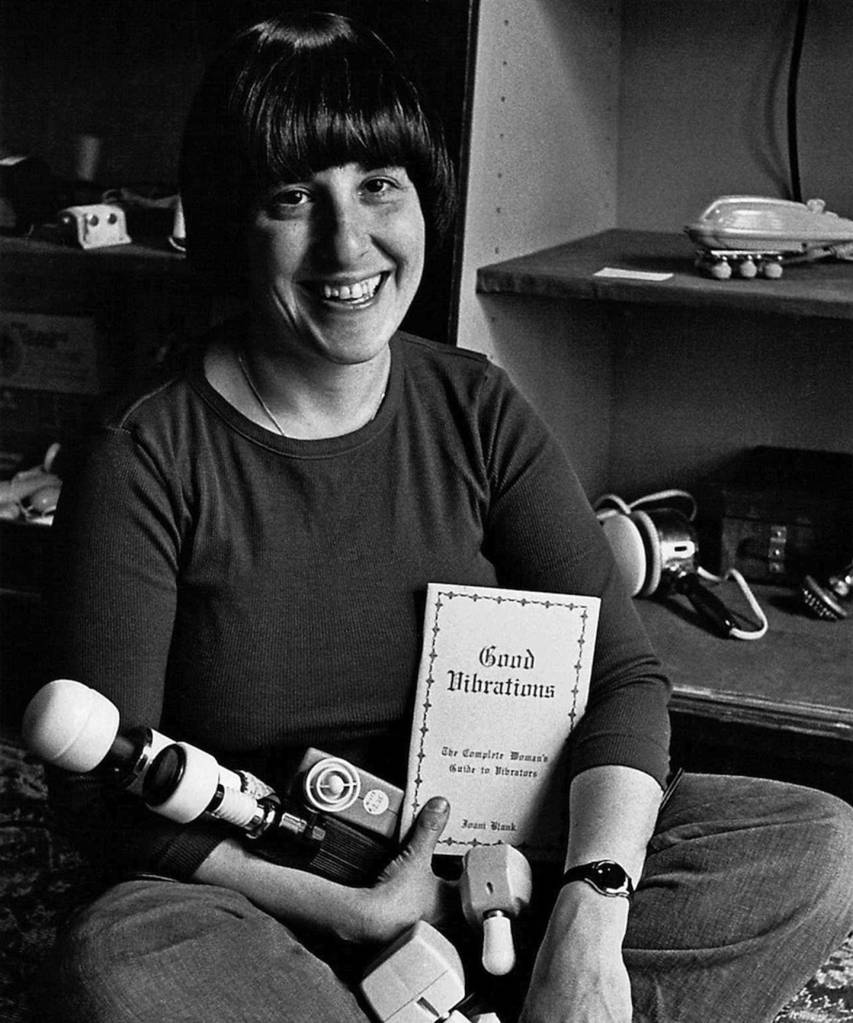
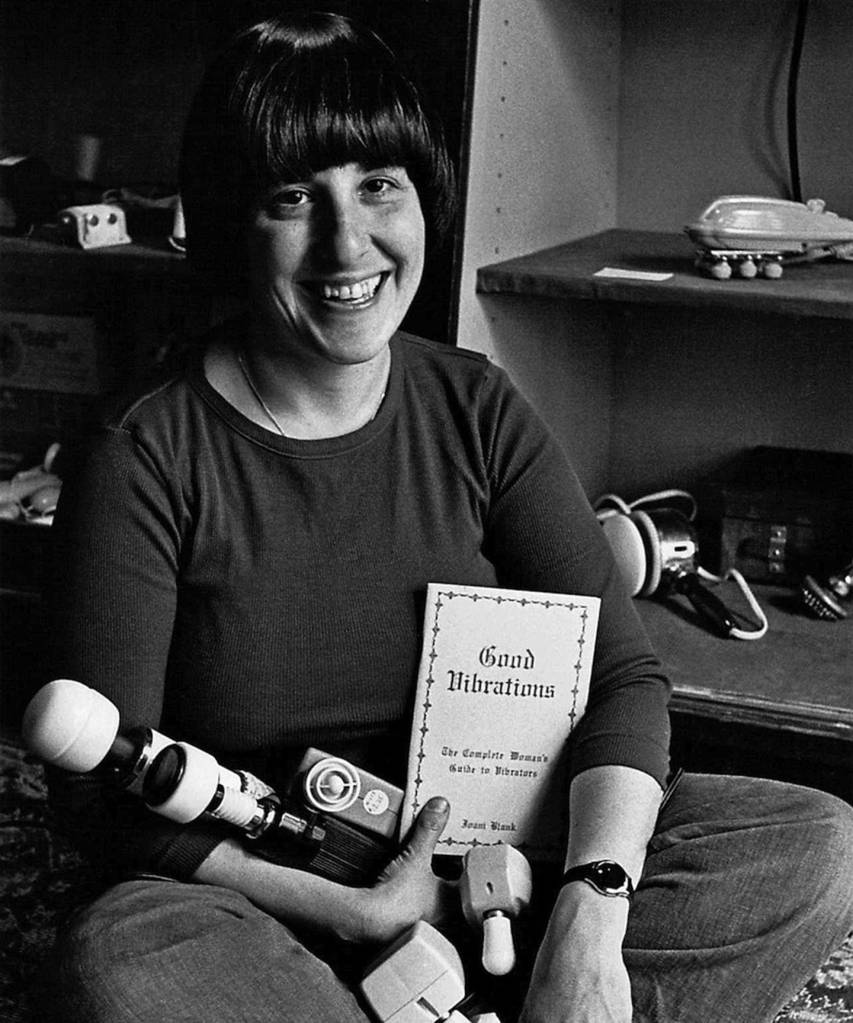
Anytime you pass a sex toy shop with large glass windows that proudly displays dildos, vibrators, and butt plugs instead of hiding them under seedy lighting, you can thank Joani Blank. In 1977, she founded the first Good Vibrations store, a feminist-leaning sex toy shop and one of the first to be run by a woman. Blank had noticed that all of the sex toy shops she’d encountered reeked of men. The windows were covered, as if you should be ashamed of the products inside, and often, there would be men watching porn at quarter-operated booths once you got inside. It was a hostile space for women. “Over and over, women would say they were afraid to go into one of those places,” Carol Queen, the staff sexologist at Good Vibrations, said in Blank’s obituary.
Prior to opening Good Vibrations, Blank was working at UCSF’s medical school with women who struggled to have orgasms. She encouraged them to try vibrators. And her experiences with these women also informed her plans for the sex toy shop. In addition to having a place that felt safe for women, she wanted to train her staff to be able to answer questions about sex and sexual health. She wanted her customers and her staff to be able to have frank conversations about sex. It was all in an effort to take some of the shame and stigma out of having sex, especially for women.
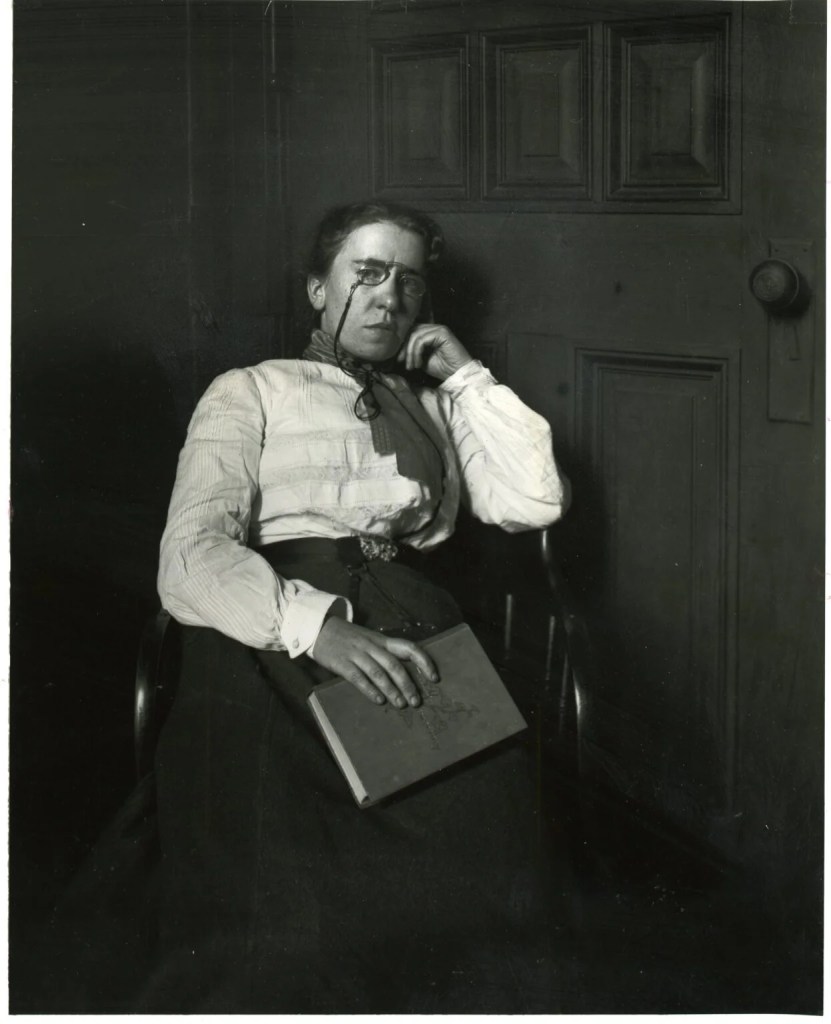
In 1917 a U.S. Attorney General wrote,
“a woman of great ability and of personal magnetism, and her persuasive powers make her an exceedingly dangerous woman.”
What a compliment.
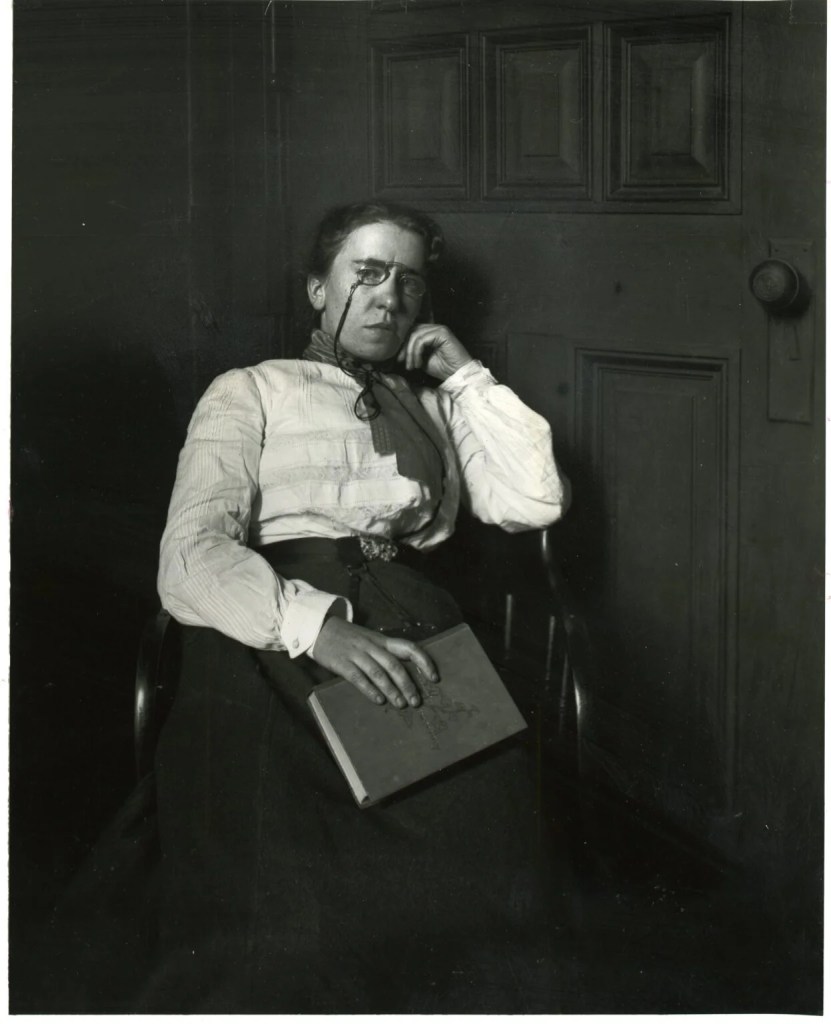
Emma Goldman 1869 – 1940 | Anarchist and Anti-War Activist
“I demand the independence of woman,” Goldman wrote in 1897, “her right to support herself; to live for herself; to love whomever she pleases, or as many as she pleases.” Unlike many turn-of-the-century anarchists, who believed that any problems faced by women would simply disappear when anarchism ushered in a new society, Goldman worked from the conviction that women labored under distinct disabilities, which had distinct causes.
Throughout her career, Goldman addressed the need for the economic, social and sexual emancipation of women. According to her, the patriarchal family, sexual and reproductive repression, and financial difficulties all contributed to women’s inferior status and prevented the full flowering of their individuality. Marriage, in her opinion, was simply a legalized form of prostitution, in which women traded sex for economic and social standing. Convinced that enforced childbearing further eroded women’s economic and sexual autonomy, she became a prominent figure in the struggle for free access to birth control.
Emma Goldman was born in 1869 to a Jewish family in Lithuania. Escaping European pogroms, she immigrated to the United States in 1885, dedicating herself to anarchism. Her anti-war activism led to deportation in 1919, and after years of exile in Europe, she arrived in Canada in 1939. Despite finding Toronto “deadly dull,” Goldman persisted. Her oratory skills fostered a vibrant anarchist movement. She encouraged local anarchists to organize, leading to the formation of the Libertarian Group, which held anti-fascist demonstrations, supported Spanish Civil War refugees, and hosted weekly political discussions. The RCMP closely monitored Goldman’s activities during her time in Canada. Goldman’s lasting impact on Toronto can be seen in the city’s continued engagement in progressive social movements and the pursuit of equality and justice. Goldman gained a reputation for being “exceedingly dangerous” partly for spreading the idea that women should have access to birth control. She dedicated her life to anti-war activism and social justice organizing. Her lectures on anarchist philosophies attracted thousands and fostered dedicated community organizing networks.

Before there was the internet there was Sue.
Sue Johnson | Sex Educator and Canadian Icon
When we think about who we want to be when we grow up, this image of Sue surrounded by vibrators and dildos openly discussing sex really sums it up. She is a vision and an iconic Canadian to generations of teenagers. Sue Johanson was a pioneer of sex-positive sex education. An advocate for birth control, safe sex and good sexual health, Johanson was well known for her frank, earnest and often humorous approach to sexuality. Her US TV program, Talk Sex with Sue Johanson (2002–08), was broadcast in 23 countries. She also hosted a radio call-in program and a TV program in Canada and wrote a newspaper column and three books.
Watch: Sex with Sue (2022)

Loretta Ross
Anytime you’ve ever used the term “reproductive justice,” that was because of Loretta Ross. Ross coined the phrase in 1994 following the International Conference on Population and Development.
Ross is co-founder of the SisterSong Women of Color Reproductive Justice Collective, which organizes women of color in the reproductive rights movement. Her work focuses on the intersectionality of social justice and on building a human rights movement that includes everyone. She was co-director of the 2004 March for Women’s Lives, the largest protest march at the time, which saw 1.15 million people gather to advocate for abortion rights, birth control access, and reproductive healthcare.
Ross also started the Women of Color Program for the National Organization for Women (NOW) in the 1980s, where she brought delegations of women of color to international conferences on women’s issues and human rights. In the 1970s, she became one of the first African American women to direct a rape crises center.
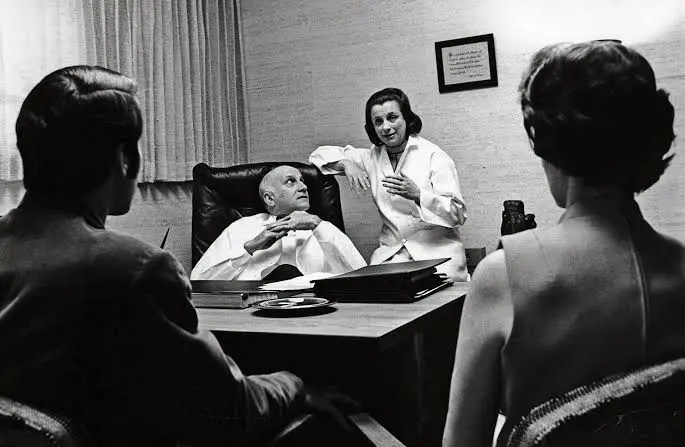
Virginia E. Johnson (1925-2013)
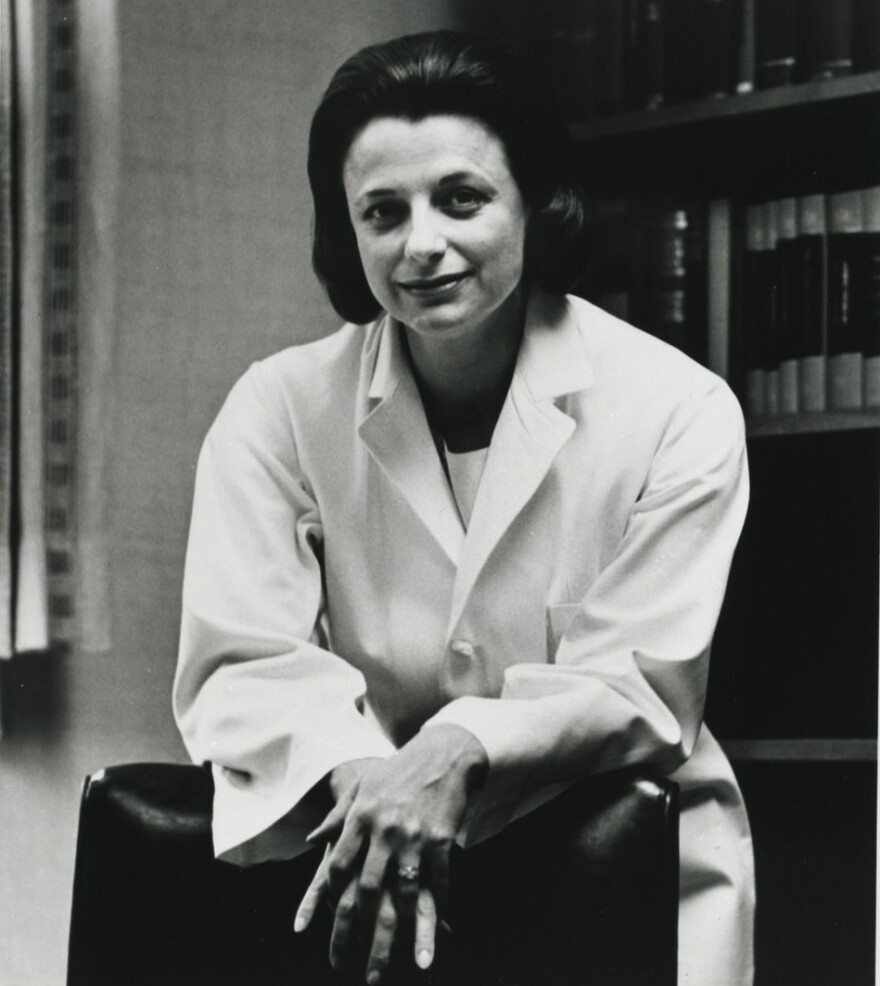
Johnson was first the research assistant for and later wife to William H. Masters, a gynaecologist and sex researcher. Together, the two studied sexual responses in hundreds of men and women and published groundbreaking studies that transformed how people understood sexuality. Johnson was first the research assistant for and later wife to William H. Masters, a gynaecologist and sex researcher. Together, the two studied sexual responses in hundreds of men and women and published groundbreaking studies that transformed how people understood sexuality. Many of their participants credited Johnson’s warm and encouraging nature as the reason they felt comfortable enough to participate in Master’s studies (which often required them to masturbate or have sex while hooked up to machines that registered heart rate and other bodily functions). She is considered a sexologist for her help in Master’s work. Often, it was her who collected patients’ sexual histories and recorded data as they became sexually aroused. Masters and Johnson made several important discoveries in their work, many of which broke negative assumptions about how women experience sex. In their 1966 book Human Sexual Response, they established that the clitoris is essential for women to have orgasms and that women can have multiple orgasms during a single sexual experience. After their book was featured on the cover of Time Magazine, it became a bestseller, making it common for people to say words like “clitoris,” “orgasm,” and “masturbation,” for the first time. In 1964, Masters and Johnson founded the Reproductive Biology Research Foundation (later the Masters and Johnson Institute), where they treated sexual dysfunction until the institute closed in 1994.
Watch: Masters of Sex on CBC Gem.
Elizabeth Bagshaw
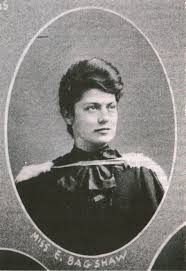
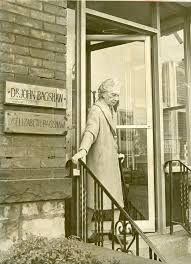
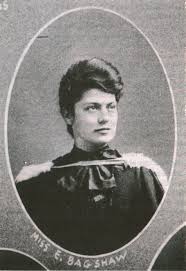
Dr. Elizabeth Bagshaw was one of Canada’s first female physicians and a lifelong champion for women’s reproductive health. Growing up in rural Ontario, she set her sights on becoming a doctor at a time when women were largely unwelcome in the profession. Dr. Bagshaw completed her training at Toronto Women’s Medical College and received her medical degree in 1905. Moving to Hamilton in 1906, she began a career in family medicine that lasted over 70 years. In 1932, when it was still illegal, she became medical director of the Hamilton Birth Control Clinic, the first of its kind in Canada. Bagshaw’s enduring legacy is reflected in the Elizabeth Bagshaw Clinic, which continues to offer reproductive and abortion care in a confidential and supportive setting. Bagshaw’s pioneering work significantly advances health equity and women’s reproductive rights, leaving a lasting impact on healthcare worldwide. Her life and achievements underscore her role as a tireless advocate for women’s health and a transformative influence in medical history. Elizabeth Bagshaw was a forerunner of the women’s movement. As one of the first women to practise medicine in Canada, she had to overcome society’s bias against women in medicine. During her seventy-year career she helped to instigate change in public opinion on that issue, as well as the issue of birth control.
Watch: Doctor Woman: The Life and Times of Dr. Elizabeth Bagshaw (1978)
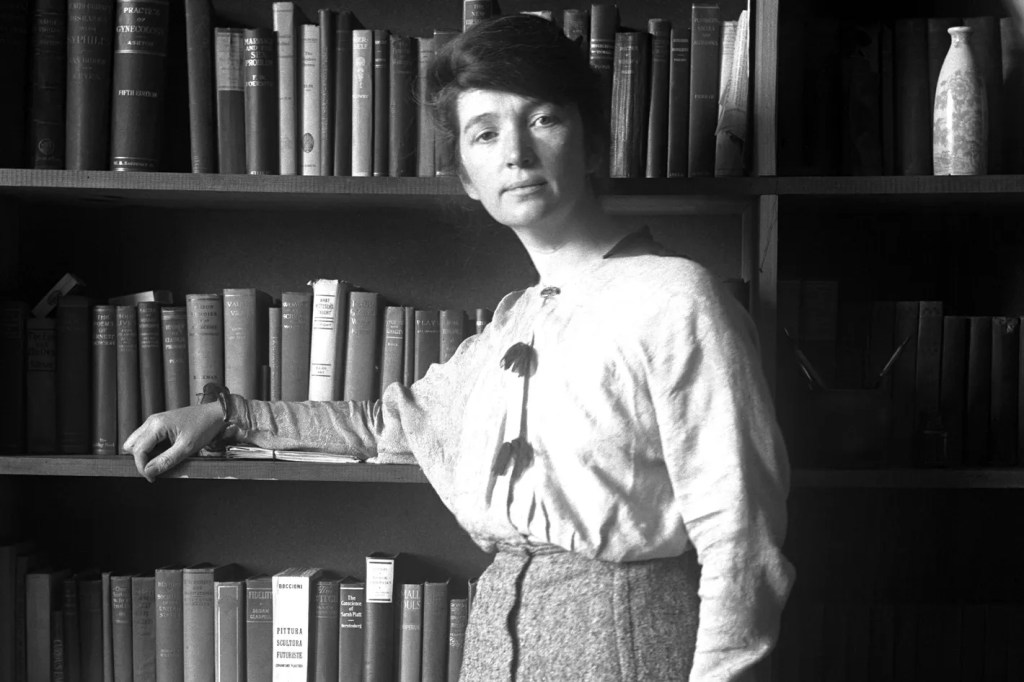
Margret Sanger (1879 – 1966)
Sanger strongly believed that the ability to control family size was crucial to ending the cycle of women’s poverty. But it was illegal to distribute birth control information. In 1912 she began writing a column on sexual education for the ‘New York Call’, entitled ‘What Every Girl Should Know’. This experience led to her first battle with the censors, who suppressed her column on venereal disease deeming it obscene. Two years later Sanger published the first issue of ‘The Woman Rebel’, a monthly that advocated militant feminism including the right to practice birth control. Inspired by her mother’s pregnancy struggles, Sanger went to Europe to study contraceptive methods, even though educating people about birth control was illegal in the U.S. at the time. When she came back to the U.S., Sanger was frequently arrested under the Comstock Law for distributing “obscene, lewd, or lascivious articles.” In 1912, she wrote What Every Girl Should Know, in which she argues that both mothers and teachers should clearly explain sexual anatomy in order to rid children of shame about sex. She wrote: “Every girl should first understand herself: she should know her anatomy, including sex anatomy.” (Preach.)
Sanger’s support of eugenics is very problematic for those of us around today, because we saw how short the path to National Socialist euthanasia was. The term eugenics was coined in 1869 by the British doctor and naturalist Sir Francis Galton (1822–1911), and it was actually aimed at improving the health of the population and its descendants and reducing the passing on of (then untreatable) diseases. The starting points were therefore health care, housing and living conditions, nutrition, hygiene, working conditions, and education. Sanger focused on the issue of abundant children. An average of fifteen pregnancies, from which around ten births would follow, meant, in poor living conditions, a vitally significant weakening of the health of the woman in question. Sick parents, constant hunger, poor housing and hygiene, too little and dirty drinking water, untreatable diseases, all these are catastrophic starting conditions in life. In her day-to-day work, Sanger saw that those who have fewer children are better able to care for their health and well-being.

